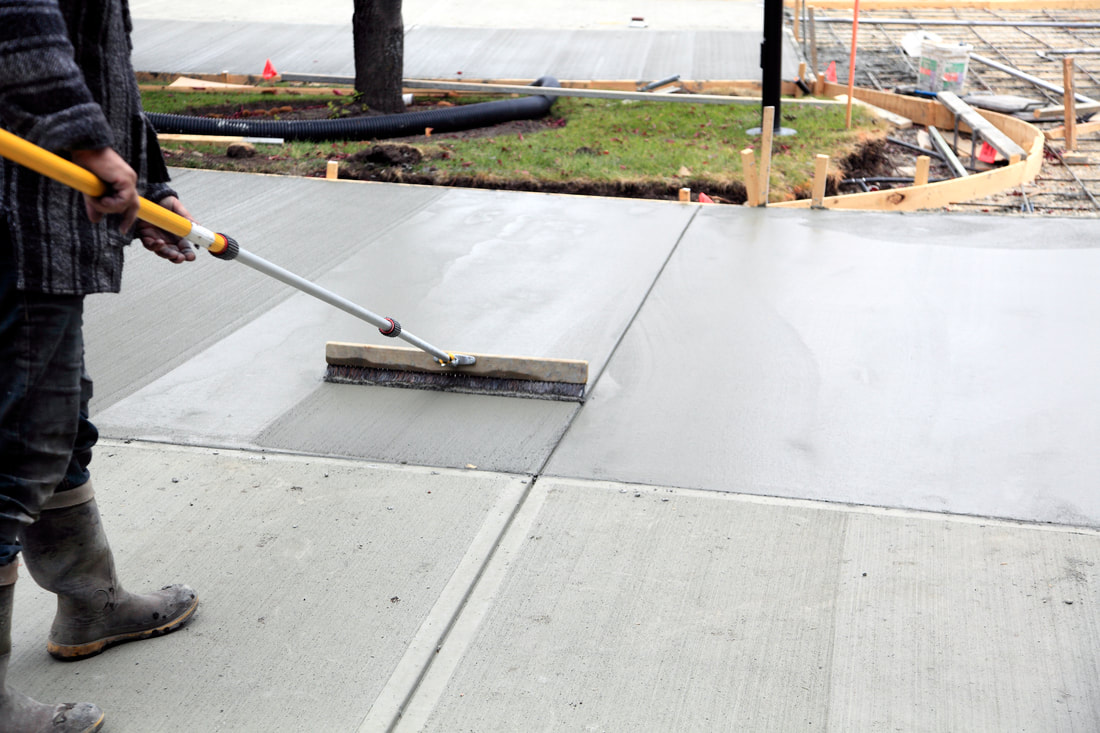
Concrete does not fail all at once. It starts with a crack you step over, a flake at the edge of the driveway or a joint where the filler has gone missing. Left alone through a few summers and monsoons, each of those gets bigger.
Maricopa Solid Concrete handles concrete repair on driveways, walks, patios, pool decks and garage floors. The first step is always working out why the damage happened, since a repair that ignores the cause does not last.
Some problems are cosmetic and can wait. Others let water under the slab and should be dealt with before the next rainy season. A visit sorts one from the other and gives you a clear list of options.
Call 520-783-7943 or send the form and describe what you are seeing.
Cracks are cleaned out and filled with a flexible sealant so water and grit stay out. Sealing does not hide a crack completely, but it stops it from feeding the damage below.
Where the top of a slab has flaked or pitted, the loose material is removed and a repair layer or a full overlay is applied so that it bonds to the sound concrete.
The joints between slabs and against the house are meant to stay sealed. Old, brittle filler is taken out and replaced so the joint can move without letting water through.
Broken corners and crumbled edges, often at the curb or the garage, are rebuilt or cut out and repoured.
A slab that is whole but low is raised, not patched. That is covered under concrete lifting.
When one panel is beyond repair, it can be removed and repoured without redoing the whole driveway or patio.
Moving ground — Soil in this valley is commonly sandy loam over clay loam. The clay takes on water slowly, swells, then shrinks as it dries, and the slab above rides along.
Settling fill — Around a new house, the soil placed back against the foundation and over utility trenches keeps compacting. Slabs poured across it lose their support.
Water — Roof runoff, sprinklers and monsoon storms deliver water to the same spots again and again. Where it gets under an edge, it carries fine soil away.
Salts — Natural salts in desert soil and in pool water can break down a concrete surface, showing up as flaking and a white powdery residue.
Sun and heat — Seasons of expansion and contraction open up joints and age the surface, most of all on slabs with no shade.
If the slab also needs a new look, a decorative finish such as stamped concrete is an option once the repairs are done.
Call if you see any of the following.
Concrete repair is priced by what the slab needs. Three things do most of the deciding: the kind of repair, the size of the area, and whether the cause has to be corrected as part of the job.
Sealing cracks sits at the small end. Resurfacing and replacing sections sit at the larger end, with lifting in between.
Access counts too. A front walk is open on all sides, while a back patio behind a block wall means carrying tools and material through the gate.
Call 520-783-7943 for a free quote. You will get a price for the repair that fits, and an explanation of why it was chosen over the alternatives.
The slab is looked at for the pattern of cracking, checked for hollow spots and measured for how far it has moved. The drainage around it is noted, along with anything nearby that puts water on the concrete.
From that you get a plain description of what is wrong, what can be repaired and what cannot, and a quote for the work that makes sense.
Most damaged concrete in Maricopa can be repaired. Replacement makes sense when the slab itself has failed, not just its surface.
A few things point toward repair: narrow cracks that have not moved much, a worn or flaking top layer, broken edges or corners, and panels that are sound but have sunk. Those can be sealed, patched, resurfaced or lifted.
Other things point toward replacement: a slab broken into many pieces, cracks that keep widening after they are sealed, large areas that rock or sound hollow, and concrete that crumbles when it is scraped. When only part of a driveway or walk is like that, the bad section can be cut out and poured new while the rest stays.
A repair is usually the smaller job. Repairing the same failing slab again and again is not, and that is when a new pour is the better call.
Usually not. Driveways, walks and patios are separate from the house foundation, and cracks in them reflect what is happening under that slab. Cracks in the house floor or walls are a different matter and are worth having a foundation specialist look at.
A patch or sealant is visible, because new material and weathered concrete do not look alike. If appearance matters, resurfacing the whole slab gives one even surface.
Yes. Repair materials are sensitive to heat, so the work is planned for the cooler part of the day and the product is chosen for the conditions.
Both belong to the same job. Sealing a crack while water still runs under the slab only delays the next one, so the source of the water should be dealt with alongside the repair.
Because so much of the city was built in the same span, the same handful of problems show up from one subdivision to the next.
Driveway panels that have dropped at the garage. Front walks with one square standing proud of the next. Patio edges that have cracked where a downspout empties. Surfaces that have turned rough and sandy after summers in the sun. None of these is unusual, and most can be dealt with without replacing everything.
When you call 520-783-7943 about concrete repair, it helps to say how long the damage has been there and whether it is getting worse. That history often points to the cause.
Maricopa Solid Concrete also handles:
Concrete repair is available throughout Maricopa, including Maricopa Meadows, Cobblestone Farms, Santa Rosa Springs, Sorrento and Rancho Mirage, and in nearby Stanfield and Hidden Valley.
Small repairs are simpler than large ones. Call Maricopa Solid Concrete or send the form, and a free quote for your concrete repair will follow a look at the damage.